Crease Recovery Tester
The Crease Recovery Tester is used to determine the ability of textiles to recover from creasing by measuring the crease recovery angle. This test evaluates the wrinkle resistance of fabrics by assessing how effectively a material returns to its original position after being folded under a specified load.
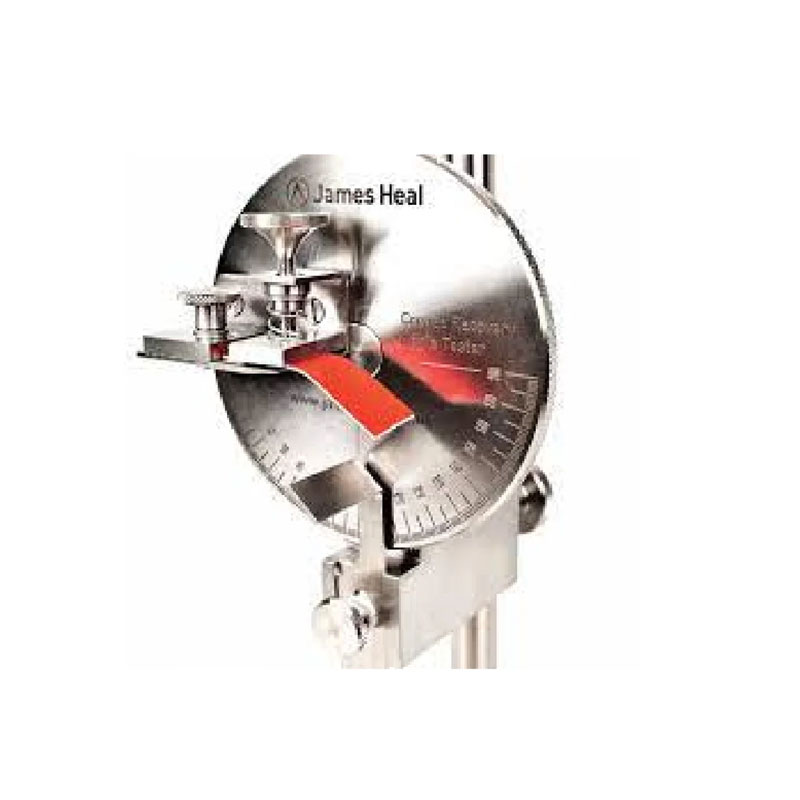
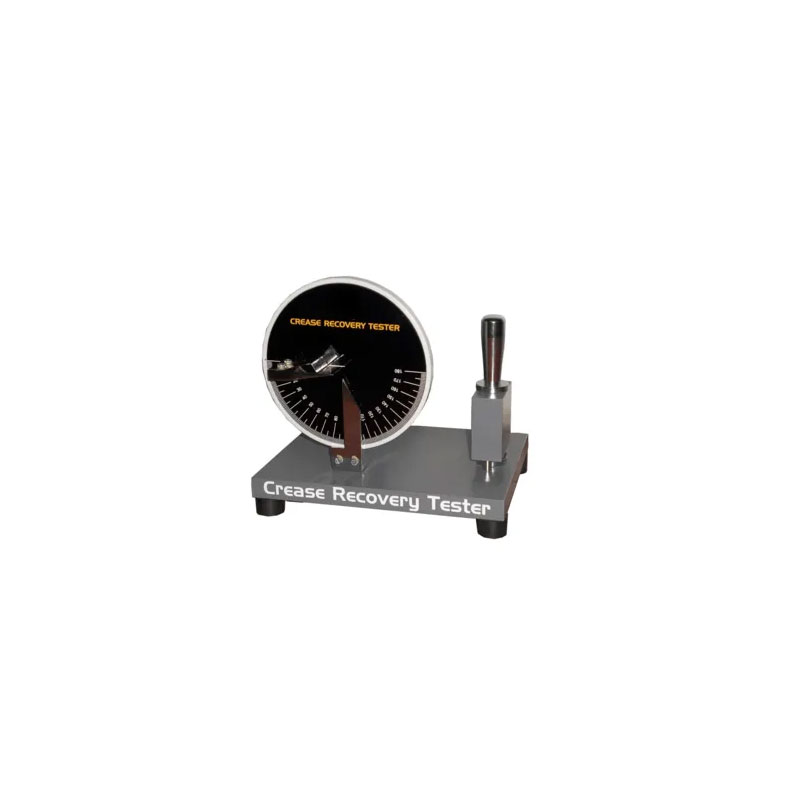
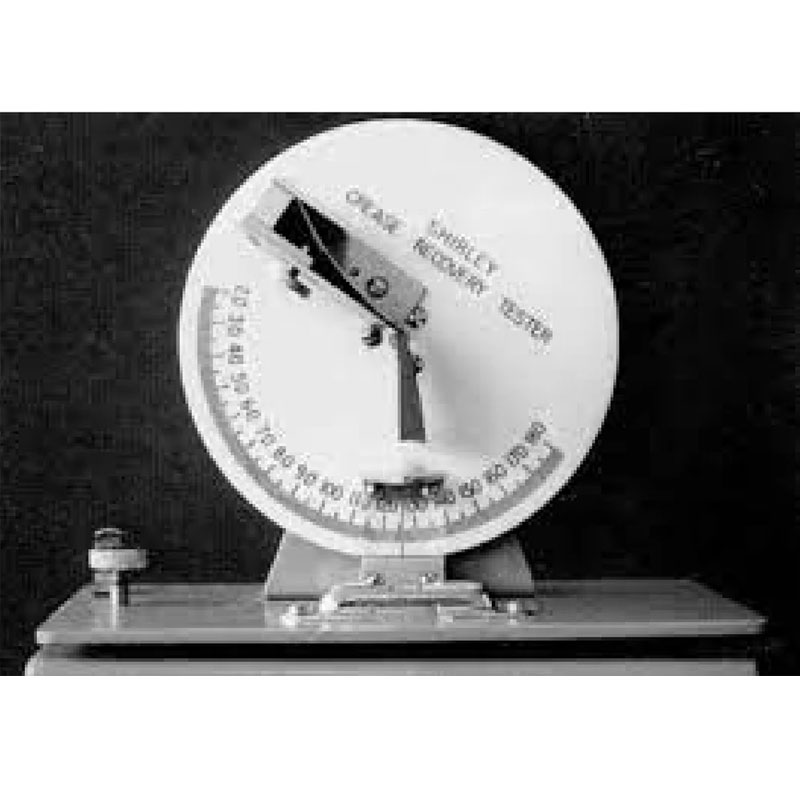
In the test procedure, a rectangular specimen is folded and creased under a 1 kg load for a specified duration. After creasing, the specimen is carefully transferred to the angle measurement assembly. One end of the specimen is secured in a spring-loaded clamp, while the other end is allowed to hang freely under its own weight. The clamped end is then slowly rotated until the free end aligns vertically. The angle through which the specimen recovers is read directly from a graduated scale. This angle represents the crease recovery performance of the fabric.
Description
The instrument consists of:
- A creasing device with two flat plates that apply a 1 kg dead weight load to the folded specimen
- An anodized aluminum circular scale calibrated in degrees
- A vertically mounted rotating disc
- A spring-loaded clamp positioned at 0° to hold the test specimen
- A vertical reference edge to align the free end of the specimen
For ease of handling, the specimen is mounted on a brass strip during creasing and testing.
Technical Data
- Size of Test Specimen: As per standard requirement
- Creasing Load: 1.0 kg
- Angle Measurement Range: 0–180° with 1° graduation
Related Standards
- IS 4681:1968 – Method for Determination of Wrinkle Recovery of Fabrics (Crease Recovery Angle Method)
- BS 3086:1972 – Determination of Wrinkle Recovery of Fabrics (Crease Recovery Angle Method)
- ASTM D1295:1967 – Standard Method for Wrinkle Recovery of Woolen Textile Fabrics using the Vertical Strip Apparatus